
ISO/IEC 27001 Elucidation
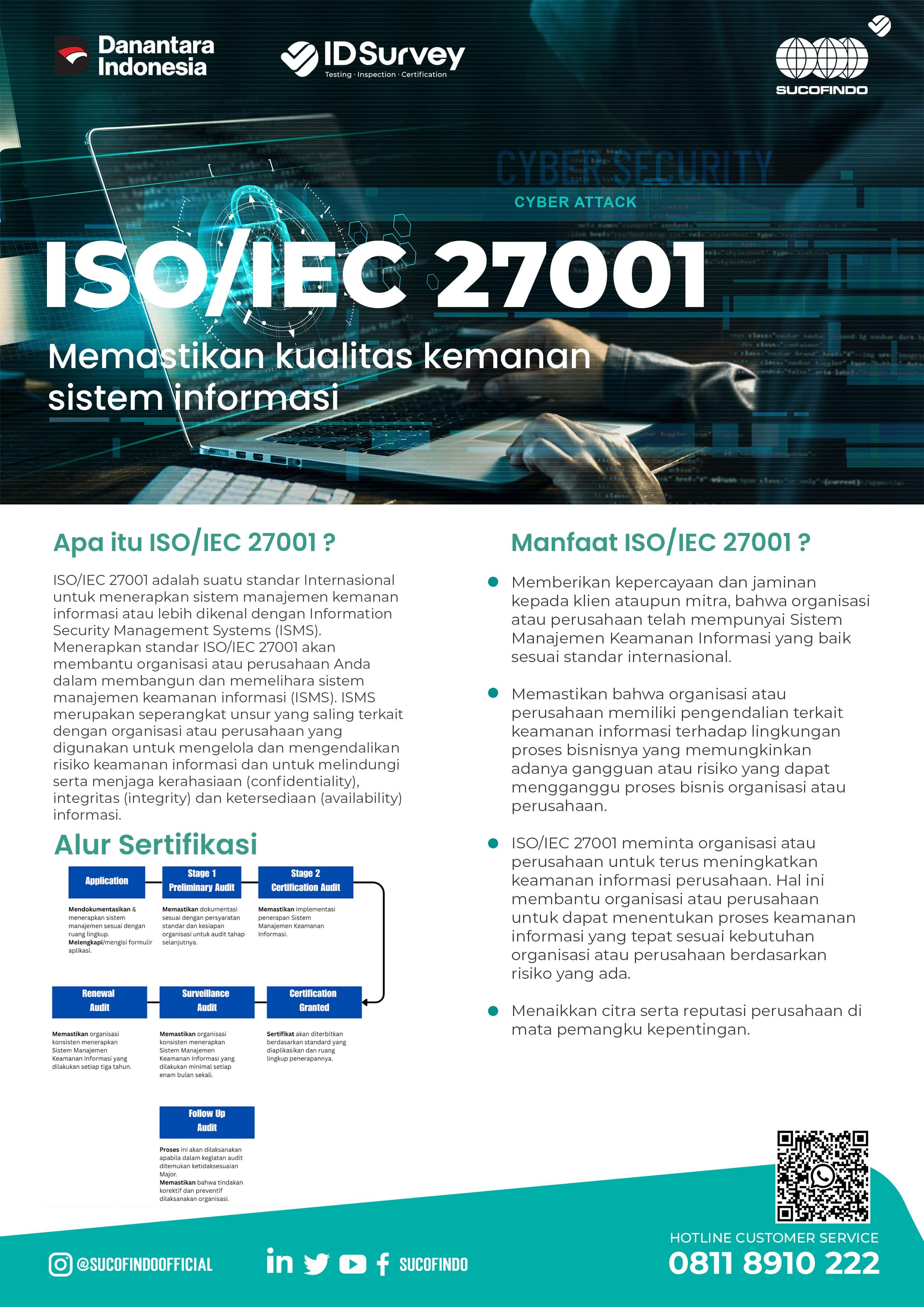
ISO/IEC 27001 is an international standard for Information Security Management Systems (ISMS). The standard is issued jointly by the International Organization for Standardization (ISO) and the International Electrotechnical Commission (IEC). ISO/IEC 27001 provides a framework and guidelines for managing information security risks within an organization. In this regard, PT SUCOFINDO provides ISO/IEC 27001 certification services to help companies implement an Information Security Management System (ISMS).
ISO/IEC 27001 Scope
The main objective of ISO/IEC 27001 – Information Security Management System (ISMS) is to protect the confidentiality, integrity, and availability of information by implementing risk management processes and building trust among relevant stakeholders.
The standard is based on a systematic approach to ensuring the confidentiality, integrity, and availability of information. By implementing this certification, companies can gain the following benefits:
Effective Risk Management
Companies can identify and manage information security risks through a systematic and structured approach. By conducting comprehensive risk assessments, organizations can identify potential threats, analyze their impacts, and implement appropriate security controls to mitigate these risks.Increased Customer Trust
ISO/IEC 27001 is a widely recognized international standard and provides clear evidence that an organization has implemented strong information security practices. This can increase the trust of customers, business partners, and other stakeholders in the organization’s ability to protect the information entrusted to it.Compliance with Regulations and Legal Requirements
Companies can meet legal and regulatory requirements related to information security. By implementing relevant controls, organizations can ensure compliance with data privacy laws, personal data protection regulations, and other requirements related to information security.Improved Business Continuity
Companies can identify and manage risks that may disrupt operational continuity. By preparing disaster recovery plans, conducting relevant testing and training, and implementing appropriate controls, organizations can strengthen their resilience against disruptions and ensure continuous business operations.Improved Vendor and Supply Chain Management
Companies can manage information security risks associated with vendors and business partners. As part of the certification process, organizations review and evaluate the information security practices of third parties they work with. This helps ensure that information security is properly maintained throughout the organization’s supply chain.
The implementation of ISO/IEC 27001 involves a series of steps, including establishing information security policies, conducting risk assessments, developing and implementing appropriate security controls, and carrying out regular monitoring and reviews.